Objects#
An object is equipment, machinery, components or other assets to be looked after. This is what maintenance is actually about.
Examples: pump, motor, vehicle, valve, lift, compressor, building.
What you can record#
| Field | What it’s used for |
|---|---|
| Name | What the equipment is called in practice |
| Object type | Categorisation — used for filtering and reporting |
| Location | Where the object sits |
| Photo | Makes recognition in the field far easier |
| Description | Supplementary information |
| Serial number | Identification against supplier and documentation |
| Supplier | Who supplied it |
| Criticality | How important the object is — the basis for prioritisation |
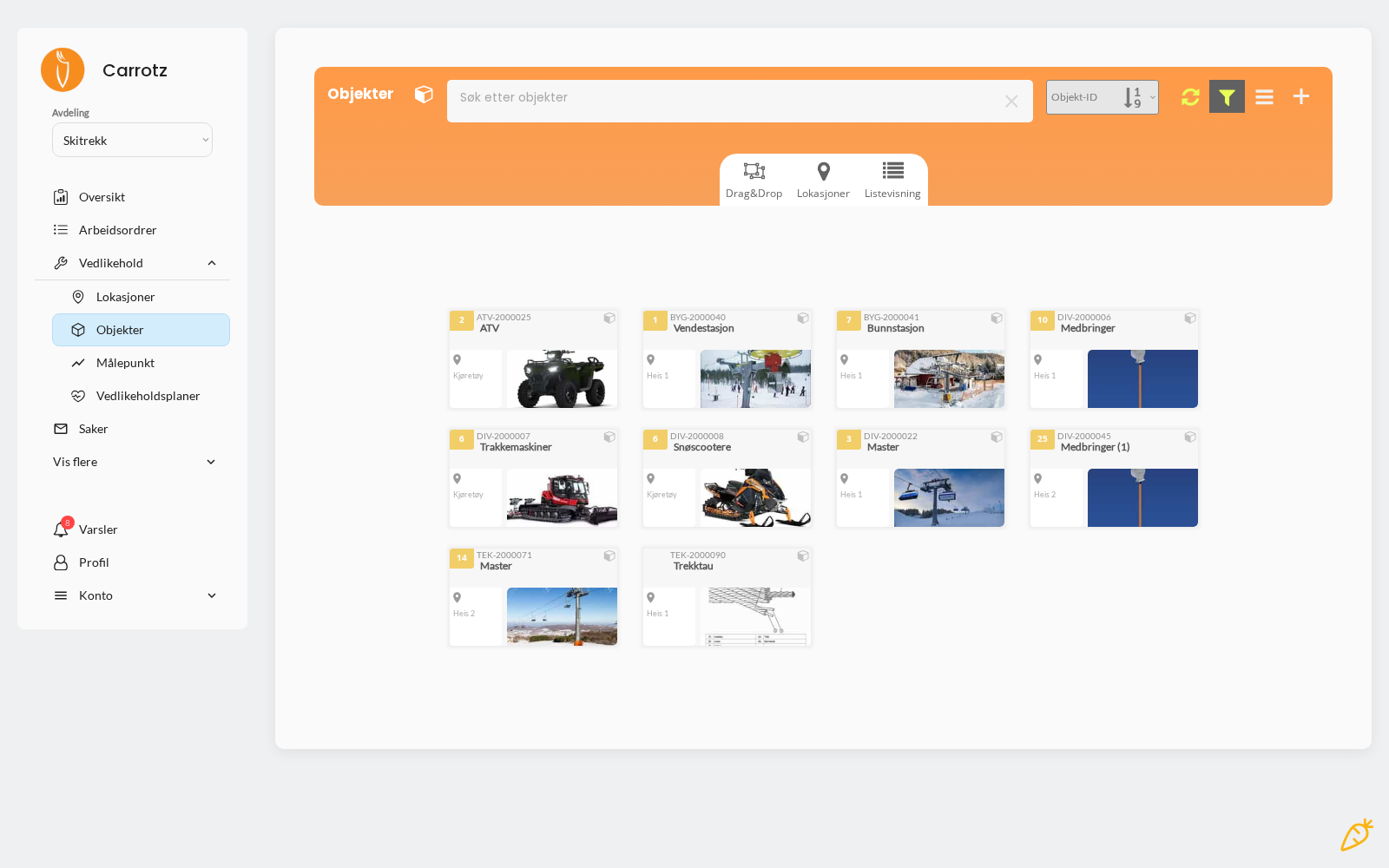
Hierarchy: main object and sub-components#
Objects can be built into a hierarchy:
Ventilation unit VU-01
├── Supply fan
├── Extract fan
├── Heat exchanger
└── Filter section
That gives two advantages: you can put maintenance at the right level of detail, and you can see history both for the whole and for the individual component.
When should you split into sub-components? When the component has its own maintenance need, its own lifespan, or is replaced separately. A filter changed every three months deserves to be its own object. A screw does not.
Criticality#
Criticality is the basis for prioritisation. It’s used to decide what must be done first when there’s more work than capacity.
Set it based on the consequence of failure: what happens if this object stops? Production halt, safety risk, or just an irritation?
Setup advice#
Link the object to the right location and object type. That is what makes filtering and reporting possible later.
Add a photo. It takes twenty seconds and saves the field user hunting for the right unit.
Be consistent with naming. “P-102”, “Pump 102” and “Feed pump 2” for the same unit make searching hard. Pick one pattern and stick to it.
An object’s history is the biggest long-term value in the system. All work orders, deviations and measurements gather here — and this is what makes it possible to judge whether something should be replaced rather than repaired again.
Next step: Checklists.